
Logging Off to Tune In: What a Social Media Detox Taught Our Founder About Boundaries, Privacy, and Slowing Down
What a three-year break from social media revealed about comparison, hustle culture, and the hidden cost of constant visibility.

Time to Read: 6 min
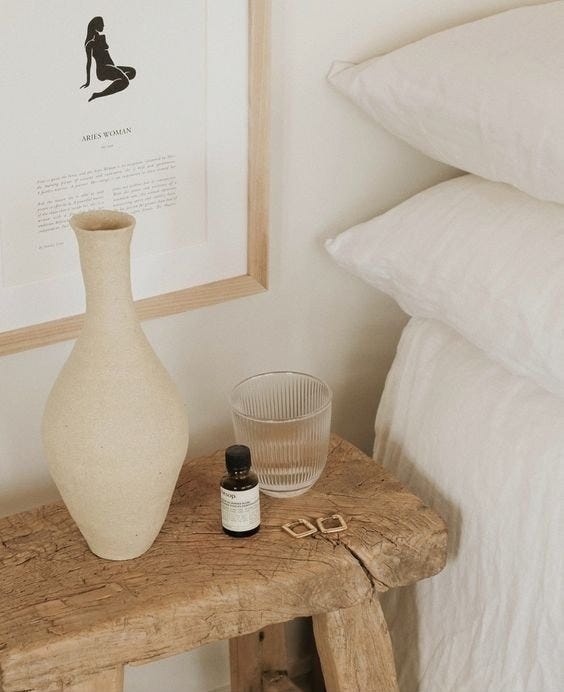
Let's talk about how our founder almost let comparison, workaholism, and the threat of self-exploitation stop them from actualizing their goals, purpose, and visions of launching an intuitive, purpose-driven business. It’s been three years since they created content or shared their work online. It wasn’t a planned hiatus, but it was one they definitely needed for their mental health. Now choosing to come back, they wanted to make sure they returned on their terms and according to the values they stand for. Because one major lesson they learned is that only a social media detox can make you hyperaware of comparison, self-exploitation, and workaholism. Here are a few reasons why you may need a social media detox to find your calm:
1. Time to Break Up with Hustle Culture
In these past three years, authenticity, intentional living, and healing have been our founder’s top priorities, because before taking a break, their mental health was suffering due to them trying to keep up with:
the social demand as a creator
trying to be everything to everyone
trying to please everyone
doing all the things to advance my career
trying to be seen
trying to succeed
Comparison, self-doubt, and lack of stability just ate away at them simultaneously with the hustle. In this time, they really got to step back. They got to see how addicted they were to the external validation, caffeine, hyperproductivity, and even the anxiety of it all. They had to face the truth that they were a workaholic. The break truly did happen for a reason, because it forced them to slow down and put their mental health first — their values, healing, rest, and privacy first.
2. Time to Reflect & Set Boundaries
They’d be lying if they said they weren’t scared to be returning to the digital space, because unfortunately, self-exploitation has become an acceptable way to make a living. And they do not mean that in a degrading or judgmental way. They mean it in the sense that we as people are not, or rather we may feel as though, we cannot keep or have anything for ourselves anymore. We, as a society, have assumed the position that life offline does not matter or that it is not as pretty, it is not as enjoyable, or desirable as life in the spotlight. Where now, we may judge what that looks like rather than identifying with the present moment.
We, ourselves, are defying what it means to have:
privacy
boundaries
things that are just ours
things that are sacred to us
Before their social detox, they did not — could not — see just how much of themselves they were sharing online for the drive, for the audience, for that sense of community we were so desperately longing for. In that, they unfortunately opened themselves up to people who saw that as their golden ticket and opportunity to judge something other than themselves.
After hiring our founder, a boss at the time told their entire team about their online presence and the work they were doing. They had no idea their boss did this until after a couple of weeks on the job, but the damage had already been done. Their choice to either share that or keep that part of my life out of a new workspace was no longer their choice. It had become known, and a couple of their coworkers used what they learned about them and their “hippie-inspired” values from reading about them online to cause conflict. They were able to judge, twist, and manipulate all that they perceived our founder to be to get ahead in the workplace, shame them for upholding boundaries, and chastise them for standing up for themselves. They weaponized what our founder shared online and used it to invalidate them, their success at work, and all of our founder’s efforts to hold them accountable for their unacceptable (and unprofessional) behavior. Our founder remembers feeling so defeated, but also angry because they couldn’t blame anyone else but themselves for oversharing… for putting so much of themselves online in the first place.
So now, our founder is very cautious about the parts of them and their journey that they share online. They are aware of the things they want to keep sacred. As much as we want to create a truly judgment-free space, they cannot (yet) say that they are not afraid that what is shared now, and how they want to be seen now, will not result in at least a little bit of the judgment they experienced some time ago. But now knowing themselves more, and what their own limits are, they know now that it is all part of the process. And they are more secure in themselves today, clear on what and how they want to live their life — focused on the peace and slowness of living well — that they are choosing to trust this time around. You can experience that, too.
3. Time to Reconnect with Your Needs
Now, our founder feels they can handle what comes in this phase of the journey and trusts themselves to be open to the experience. Why? Because they have taken the time to learn more about what they need and the parts of them they feel others are entitled to. This time around, they are approaching this return to the digital space with a sense of newness, preparedness, and understanding of where mental health and personal life fit into that.
For now, they are choosing not to show their home, face, family, and friends in any way (enter in our refresh of blog stock photos). Comments are not always going to be enabled, and they’re sure they’ll unplug every now and then. Because that is where they are choosing to draw the line and where it ends for them. The most important thing is that they’ve decided to return to doing what is and what feels comfortable to them to find our For Conscious Consumers tribe, and their voice, too. In a way, they’re finding more freedom and liberation in that. Because this time, it’s their choice and they’ve had the time to think about where and how they want to draw those lines, and with how they want their voice to be heard.
This time around, they just want people to hear and connect with the message, not concern themselves with how good it all looks or compare themselves to who the message is coming from—not that they did from the start; that’s just how our brains are evolving in the digital age. But that is how they’re feeling now, and they’re open to how that might change or shift in the future.
All in all, there are several things people may want to think, talk about, and consider before plastering their lives online for the whole world to judge (and see). It’s something our founder wished they had stopped to think about before experiencing a mental breakdown and workplace trauma. One may think they’re starting a side hustle or innocent creative outlet, but it can become a slippery slope of losing yourself if you’re not careful. So we guess the moral of the story — the lesson our founder got out of their social media detox — and what we want to leave you with here today is:
Your time is sacred. Your energy is sacred. Your life is sacred. Treat it as such, and others will follow suit.