

Time to Read: 4 min

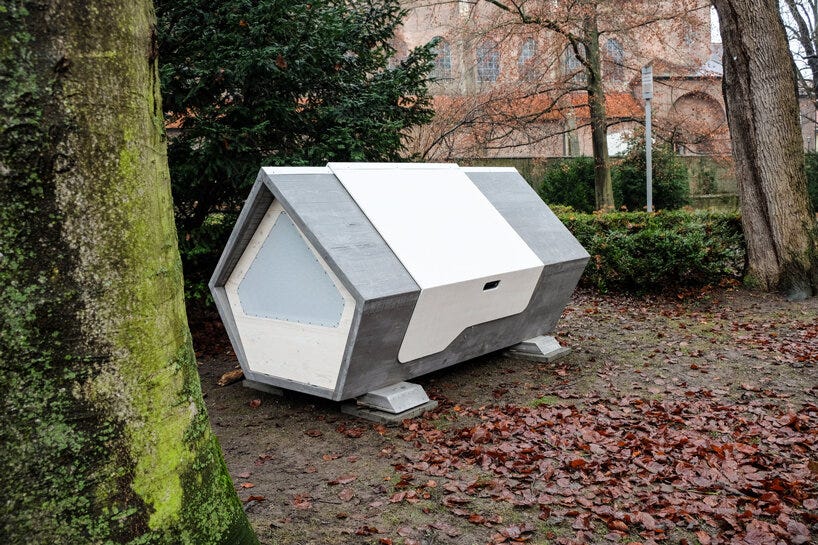
There are some news stories that make you stop scrolling for a second—this was one of them. In Ulm, Germany, solar-powered sleeping pods have been designed to provide people experiencing homelessness with a safer place to sleep when traditional shelters aren’t an option. The pods are insulated and designed to protect people from the elements, and they’re even large enough to accommodate a pet. To be honest, I love the intention behind this. Not because a little solar-powered pod is going to solve homelessness. It absolutely won’t. But because it represents something we desperately need more of: creative solutions that still leave room for human dignity.
A Little More Than a Place to Sleep
The pods, known as Ulmer Nest, were developed as an emergency option for people experiencing homelessness who may not be able to, or may not want to, use traditional shelters. That distinction matters, because homelessness isn’t a one-size-fits-all experience, so why should our solutions be?
Maybe someone has a pet they aren’t willing to leave behind, they don’t feel safe in a traditional shelter, they need a little privacy, or maybe they’re navigating circumstances that make existing systems difficult to access.
There are so many reasons a person might find themselves without a home, and yet we often talk about homelessness as though there’s one simple solution that everyone should be willing to accept: Here’s a warm bed, a shelter, a list of rules.
Problem solved. Except...not really. The Ulmer Nest pods don’t pretend to be a permanent answer. They’re an emergency measure, but even within that limitation, the design considers the person using it. There’s something important about that.

Homelessness Isn’t a Personal Failure
This is where the conversation gets bigger than solar energy. As a society, we need to seriously reconsider the way we talk about homelessness in the first place.
All it takes is one medical emergency or a sudden job loss to see how quickly housing instability can strip away your sense of security. And when you’re already dealing with the stress of not knowing where you’ll sleep, where you’ll keep your belongings, or what comes next, the last thing you need is to feel like your humanity is being stripped away along with your housing.
That’s why stories like this stand out. They’re a reminder that we can choose compassion. We can choose to design shelters that offer privacy. We can think about people’s pets and belongings. We can invest in infrastructure that works with the environment instead of against it, and we can stop acting like people experiencing homelessness somehow deserve less dignity because they’re going through one of the most difficult circumstances imaginable.
Because the truth is: homelessness isn’t just an individual problem. It’s a community, housing, economic, and policy problem. And, in our opinion, it’s also a moral one.

What Are We Doing With Our Resources?
This is the part that really stands out: The United States loves to call itself the richest country in the world, yet homelessness remains a persistent reality in communities across the country. So when projects hit news feeds, our first thought isn’t necessarily, Wow, cool solar technology.
It’s more like: Why aren’t we seeing more of this kind of creative thinking? Why aren’t cities experimenting with more humane emergency shelters? Why aren’t we looking at unused spaces, modular housing, tiny homes, renewable energy, community land trusts, more supportive housing, and other approaches as pieces of a much larger puzzle? Why aren’t more of our resources going toward making sure people have somewhere safe to live in the first place?
We have innovators, architects, engineers, and communities full of people who are willing to think outside of the box. What we need is for the people making decisions about our cities to actually listen to them.

And Yes, There Is a Sustainability Connection
It’s easy to separate environmental sustainability from social issues. We talk about renewable energy over here and housing over there, as though they’re completely unrelated—they’re not.
A truly sustainable community has to be sustainable for the people who live in it, too. What good is a greener city if the people living in that city can’t afford to remain there? What good is beautiful sustainable infrastructure if it’s only accessible to people who already have the resources to benefit from it? And what does sustainability really mean if we’re willing to protect natural resources while ignoring the people in our communities who are struggling to meet their most basic needs?
That’s why we love the idea behind these solar shelters. Not because they’re perfect or solve homelessness, but because they show us what can happen when we combine innovation with empathy.

We Can Do Better
We’re hopeful that projects like Ulmer Nest inspire other cities to experiment with solutions that are more thoughtful, humane, and responsive to the realities people are actually facing; and hopefully, we don’t stop there, because the goal shouldn’t be to create increasingly sophisticated ways for people to survive homelessness. The goal should be to create communities where fewer people experience homelessness in the first place.
Emergency shelters matter. Temporary solutions matter. Keeping someone warm and safe tonight matters, and so does building a future where they don’t have to rely on a solar-powered pod (or any other emergency shelter) to have a place to call home. We’ve got to start thinking bigger, getting a little more creative. And frankly, we’ve got to start caring a whole lot more, because if we really want to build a more sustainable future, people have to be part of the equation. We can do better, so let’s start acting like it.
If you liked this story, you might also be interested in these:


Prefer to watch? Here’s a quick breakdown of the Safer Beauty Bill Package and why it’s worth paying attention to: